

Threats we cover · Sabotage

Osavul for sabotage threats

Sabotage threat intelligence for rail, energy and industrial operators. Osavul spots proxy recruitment, site reconnaissance and drone activity early, then models who may strike, how, where and when.

  • Front-Runner, Gartner Disinformation Security report
  • Deployed for NATO
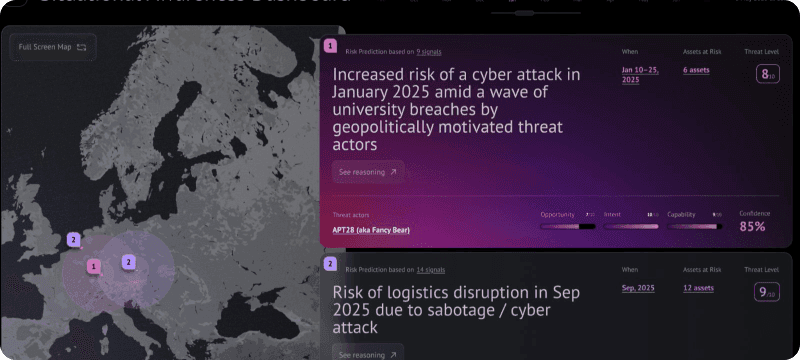
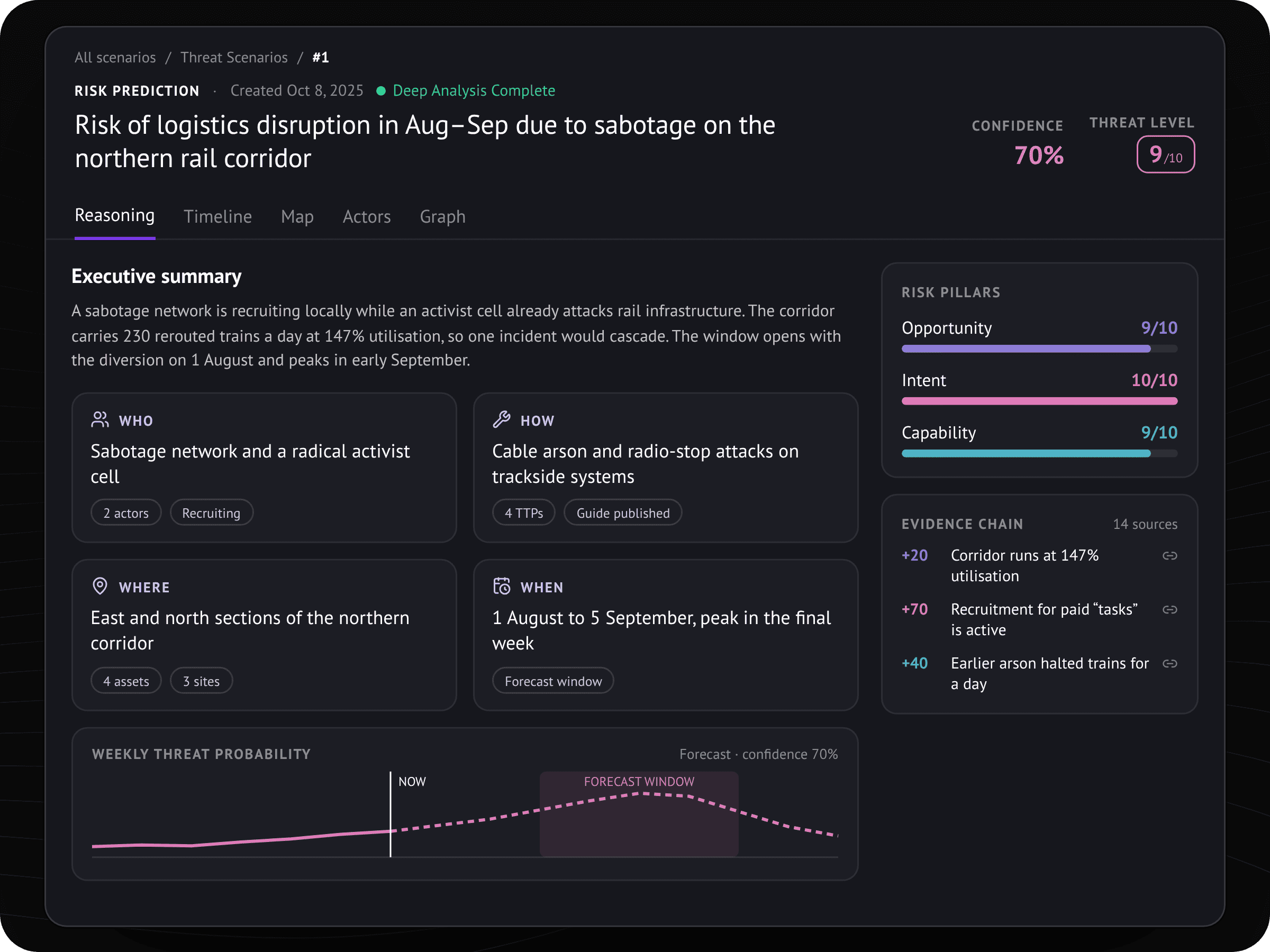
Janus risk card for sabotage of a rail logistics corridor

How Osavul helps

How Osavul helps counter sabotage

Sabotage is the most physical of hybrid threats. Yet most plots start online, with a small paid task posted in a chat. That's the stage Osavul watches.

AI Intel Platform features

Sabotage threat intelligence capabilities

Sabotage, attacks on sites and infrastructure, surveillance and unrest near your locations and people.

Track threat actors, TTPs and weak signals behind hybrid attacks.

150,000+ public channels and chats, narrative detection and source profiles in 30+ languages.

Prioritized actions, mitigation plans, takedowns and automated defenses in your SIEM.

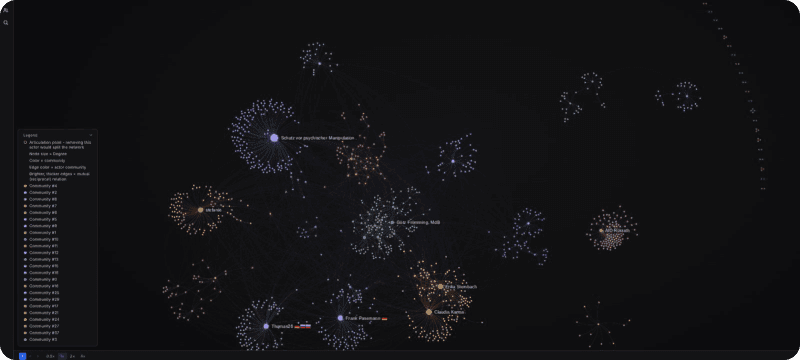
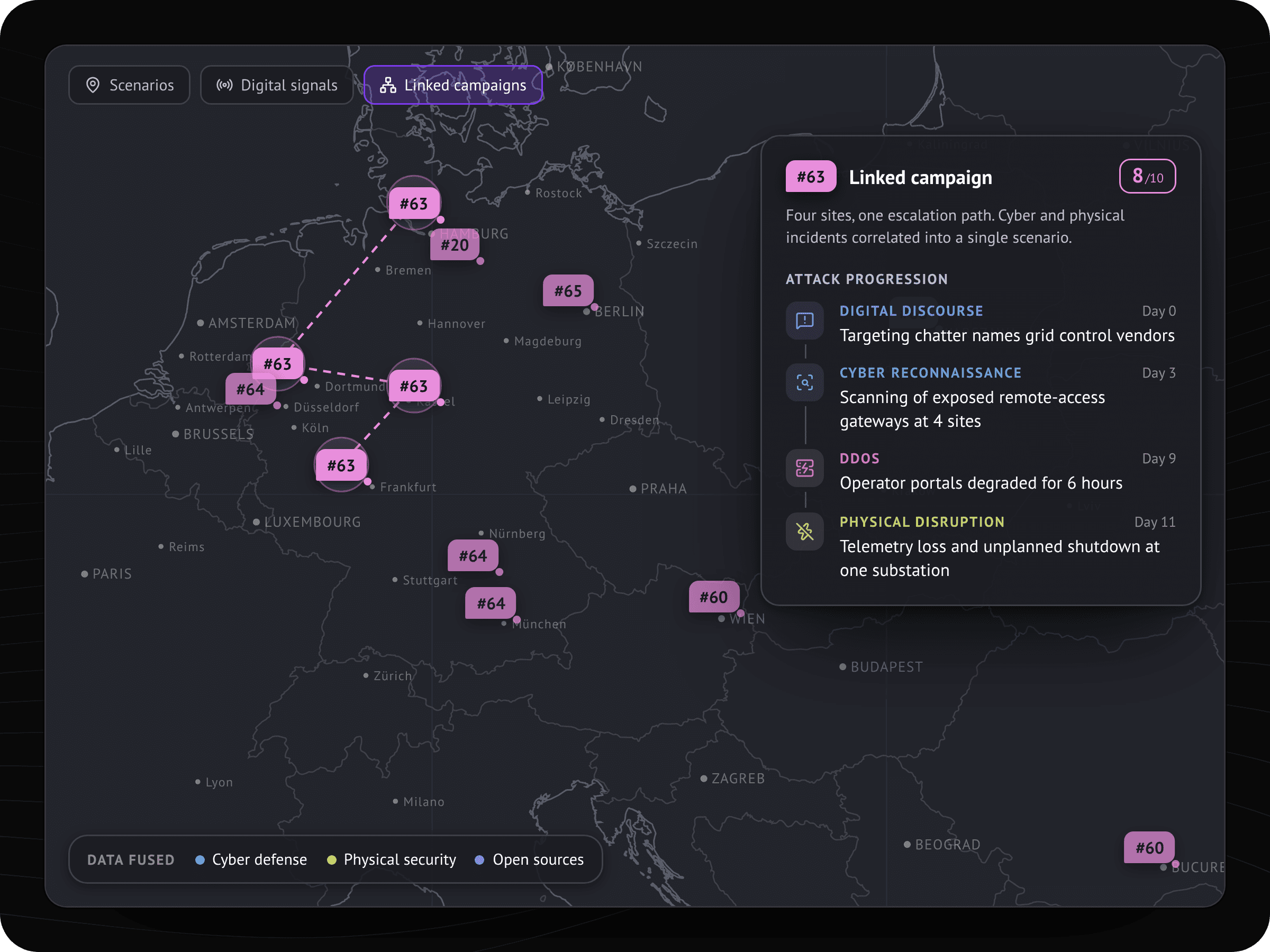
Osavul interface: Cross-domain cyber and physical disruption correlation

Hybrid attacks are no longer a government problem alone. The companies running energy, airports, ports, transport and finance now face the same adversaries, usually without the means to see them coming.

Co-Founder and CEOOsavul
Janus threat forecast for a Western European national rail operator

Case study · Sabotage · Critical infrastructure

How a Western European national rail operator anticipates sabotage threats to its network

Janus risk modeling across sabotage, espionage and influence signals targeting rail assets, stations and staff.

Read the case study
FAQ

Frequently asked questions

Short answers for security, risk and operations teams.

Talk to a threat analyst

Sabotage threat intelligence is the collection and analysis of signals pointing to planned or likely attacks on physical assets, networks and supply chains: reconnaissance, proxy recruitment, calls to action. With it, a security team gets time. Time to protect a site, change a schedule or call the police.

Usually through Telegram and TikTok. A handler offers a small paid job, say photographing a rail junction, and later asks for more, up to arson. ICCT and GLOBSEC reviewed 151 cases of Russian sabotage and related plots and found that about 95% of the people involved had no formal tie to Russian intelligence.

Rail, energy, logistics hubs, defense plants and military supply routes get hit most, and ports aren't far behind. ACLED expects more of this in Germany, Poland and the Baltic states in the coming months, with undersea cable sabotage and drones over critical sites still a weak spot. German police counted over 1,000 suspicious drones in 2025.

By looking at what happens before it. Recruitment posts, requests to film a site, drones seen twice in one week, threats against a plant: these tend to show up days or weeks ahead. Osavul picks them up in open, social and underground sources, links each one to your assets and tells your team.

Yes. You can run Osavul on-premise or in a sovereign cloud and connect it to your SIEM or other tools by API, which keeps your data under your control. Setup, integrations and onboarding are done together with Osavul analysts, solution architects and engineers.

See your sabotage risk exposure

Get a demo built around your sites, assets and suppliers.

Book a demo
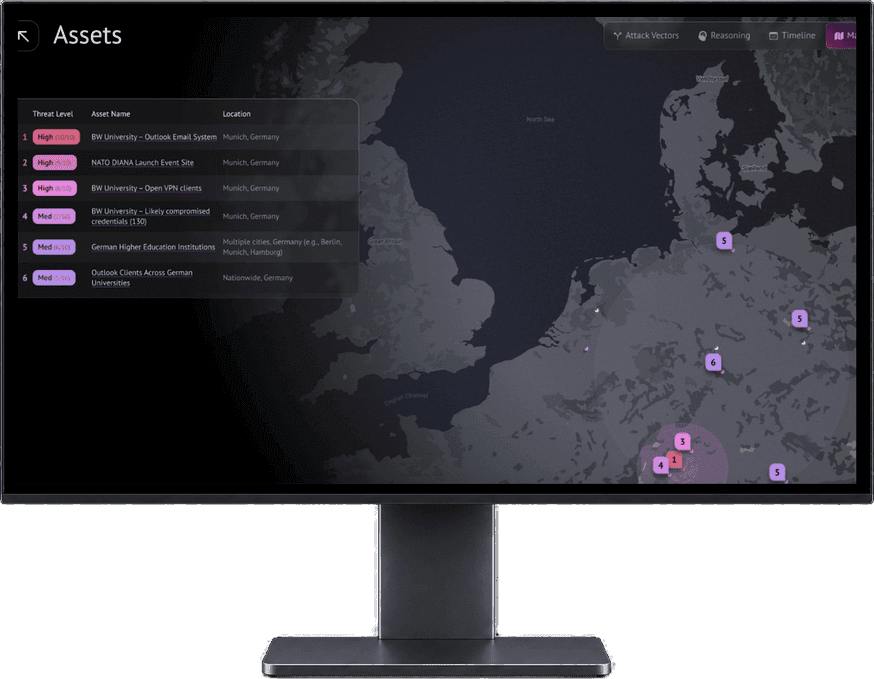
Janus risk intelligence platform on a monitor