
Case study · Rail
How Janus forecast rail sabotage in Western Europe
Janus named the target, the method and the actors behind a rail sabotage campaign months before the first attack.
Read the case studyAI Intel Platform
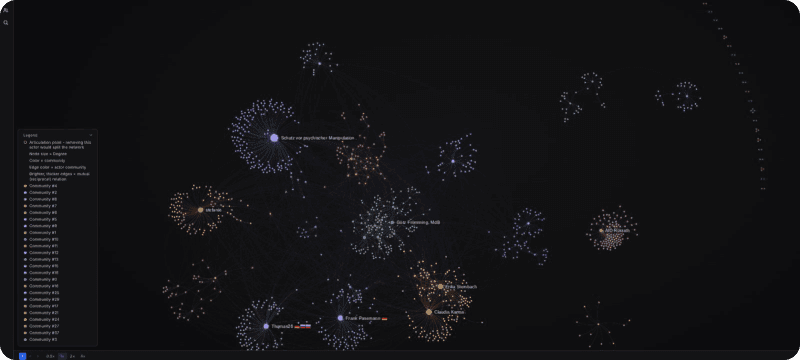 Data intelligence platformNebulaAccess and enrich data from 10+ data types, including messaging apps and underground communities, and get it in the form your analysts need.Explore Nebula
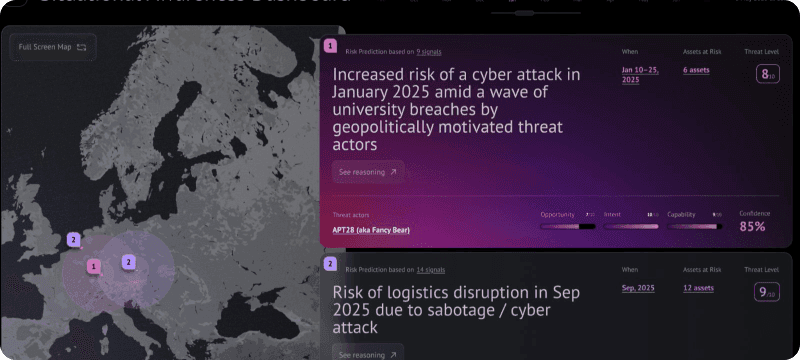 Risk intelligence platformJanusTrack physical, cyber, cognitive and hybrid threats, get early warning and model who may attack, how, where and when.Explore Janus
Products
 Osavul for Corporate SecurityDetect sabotage, espionage, and influence operations targeting your people, sites, and operations, with real-time alerts and AI risk modeling.
 Osavul for National DefenseHybrid threat intelligence and information environment assessment for defense and security institutions, from early warning to response.
 Osavul for Strategic CommunicationsDetect, analyze, and counter FIMI campaigns with narrative intelligence across social media, Telegram, and the open web in 100+ countries.
 Osavul for Brand ProtectionIdentify narrative attacks, coordinated inauthentic behavior, and reputational risks targeting your brand before they escalate.
Solutions
Find the right setup by use case, industry, or team.
By use case

Industries · Technology & Telecom
Telecom security for network operators and tech firms. Early warning on cable cuts, mast arson, state-backed intrusions and the stories that set them off.
Industry stats
Almost every byte crosses a subsea cable, a mast or a data center at some point. Shadow fleets, saboteurs and hacktivists know exactly where those are.
99%
Of intercontinental data traffic runs through submarine cables
150–200
Submarine cable faults happen worldwide every year
Source: ITU, International Advisory Body on Submarine Cable Resilience, July 2026
6
Suspected sabotage or disruption incidents hit Baltic Sea cables in December 2025 and January 2026
50+
Russian vessels have been seen around dense cable areas in the Baltic Sea
How Osavul helps
Start with the platform, or go straight to the use case your team needs to solve.
Product · Janus
For the teams who look after cable landing stations, masts, data centers and field engineers. Alerts as things happen, and a view of who is behind them.
Use case
A probe on your network and a stranger photographing a mast in the same week? Osavul puts the two side by side.
Explore Hybrid Threat IntelligenceUse case
When a vessel of interest slows down over your cable or a crowd gathers at a mast, it shows up on the live map.
Explore Situational AwarenessUse case
Catch the 5G, privacy or outage story before it becomes vandalism or a regulator’s letter.
Explore Narrative IntelligenceUse case
Fake support accounts and cloned executive profiles that use your brand to scam customers.
Explore Digital Risk ProtectionHybrid risks
State actors, criminals and conspiracy groups go after the same networks for different reasons. Osavul’s AI threat intelligence tells you when any of them is pointing at your assets.
An anchor dragged for miles, a cut cable, a research vessel that keeps coming back. Osavul follows vessels of interest in open reporting and threats to your landing sites.
Learn about sabotage5G conspiracy groups still name masts and engineers, and some of them act on it. Osavul catches the call to action and the local crowd forming around your site.
Learn about narrative attacksSome intrusion sets want your call records and network maps. Others try to recruit the person who has access to them. Osavul shows you both.
Learn about espionageA hacktivist group knocks a portal offline and claims it stole customer data. Osavul helps you tell the real breach from an empty claim, fast.
Learn about hybrid threatsHybrid means multiple things and that was our biggest insight. No one specific vector should be siloed.
Case study · Rail
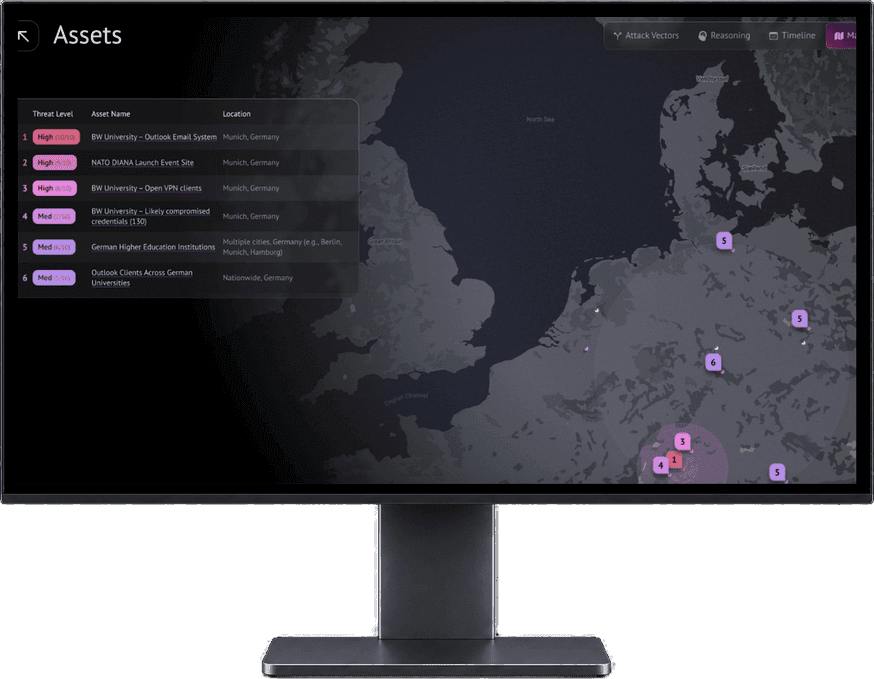
Janus named the target, the method and the actors behind a rail sabotage campaign months before the first attack.
Read the case studyFAQ
Hybrid risk intelligence for telecom operators and technology companies.
Talk to a threat analystOsavul would put cable and mast sabotage first, because one cut can take a region offline. For telecom security teams the next worries are intrusions by state-backed groups, staff who get recruited, hacktivist DDoS and conspiracy stories that end with a mast on fire. Most of it peaks around elections and political crises.
Slowly, then quickly. A local Facebook group shares a claim, a Telegram channel names the mast on Elm Street and the engineer who services it, and somebody suggests doing something about it. That pattern ended in mast fires in several European countries in 2020. Osavul’s narrative intelligence flags posts that mention your sites.
In plain terms, it says UK providers own their security risks. The Telecommunications (Security) Act 2021 and the rules under it tell public telecom providers to find and fix weaknesses in their networks and supply chain, and Ofcom checks that they do. Physical sites count too. Osavul’s part is the threat picture behind those assessments.
Osavul watches open reporting, maritime and defense sources, social media and Telegram for activity near your cable routes and landing stations: a vessel of interest, an odd survey, a threat against a repair crew. Janus links that with wider hybrid activity and raises the risk level for each asset.
Yes. Some Osavul clients keep everything on their own servers, others use a sovereign cloud. Either way, data about your sites, people and incidents doesn’t leave your jurisdiction. Before anything is collected, Osavul solution architects sit down with your security and IT people to agree the setup, the integrations and who gets access.
Book a demo built around your network, sites and services.
Book a demo