




By team · Risk Management

Security risk management with hybrid risk intelligence

Security risk management for hybrid threats: Osavul models who may target your sites, people and suppliers, how, where and when. Sabotage, espionage, cyber and influence risks finally sit in one place.

  • Front-Runner, Gartner Disinformation Security report
  • Deployed for NATO
City skyline at night seen from an office tower

Why it matters

Hybrid threats are now a board-level risk

Ask risk leaders what keeps them up and you'll hear information integrity, geopolitical risk and sabotage. Across the European Union, critical entities are now legally required to assess hybrid risks.

How Osavul helps

How Osavul supports security risk management

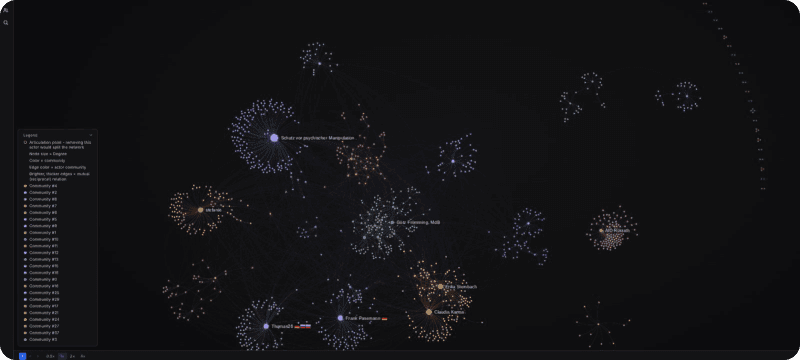
A cyber incident, a brand rumor, and a depot fire sit on three separate rows of your risk register. Osavul connects them on one screen, fully scored and backed by source evidence.

Hybrid threats span digital and physical environments, and our customers shouldn't have to defend against them in silos.

Co-Founder and Chief Business Development OfficerOsavul
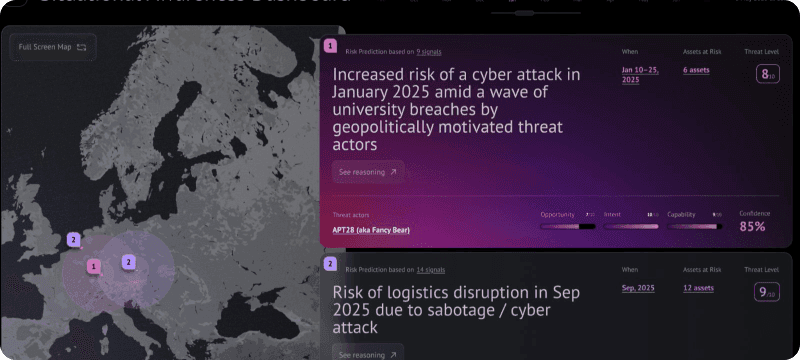
Janus threat forecast for a Western European national rail operator

Case study · Critical infrastructure

How a Western European national rail operator anticipates hybrid threats to its network

Janus risk modeling across sabotage, espionage and influence signals targeting rail assets, stations and staff.

Read the case study
FAQ

Frequently asked questions

Answers for risk management teams.

Talk to a threat analyst

Security risk management is how an organization decides which threats to its people, sites and reputation to deal with first, and who deals with them. In the UK it's often called protective security. In Europe it now has to cover hybrid threats too, because sabotage, cyber attacks and rumors tend to arrive together and land in the same risk register.

Pick the sites and services you can't afford to lose, and write down who might want to disrupt them. Then look for signs they're trying: reconnaissance, recruitment posts, phishing, hostile stories. That's where Osavul helps, scoring likelihood and impact for each asset and updating the score when something changes.

Horizon scanning is looking for risks before they arrive, usually six months to a few years out. Government teams in the UK and the Netherlands have done it for decades, mostly by hand. Osavul does it nonstop for hybrid threats, across open, social and hard-to-reach sources in 100+ countries.

Through the API into your GRC tool, or as a plain report. Each threat arrives with its sources, the likely actor, a likelihood score and a trend. If an auditor later asks why a rating went up in March, you can open the post or report that caused it.

Yes. Some Osavul clients run everything on their own servers, others use a sovereign cloud, and some are happy with SaaS. Data about your sites and people stays in your jurisdiction either way. Osavul solution architects agree the setup and access rights with your IT team before anything is collected.

See the hybrid risks facing your organization

Book a demo that starts with your sites, not a slide deck.

Book a demo
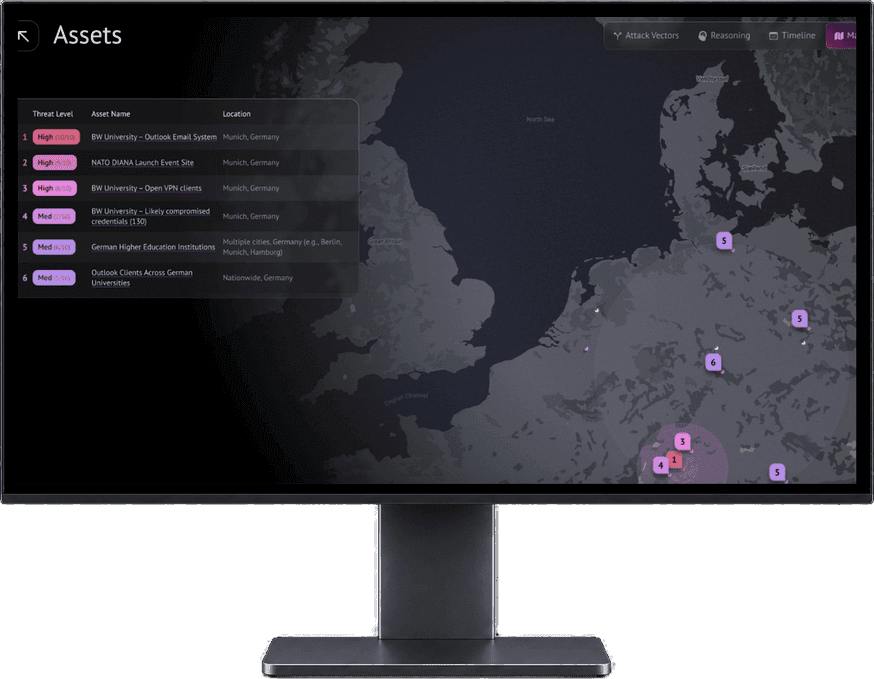
Janus risk intelligence platform on a monitor