Threats we cover · Physical threats

Osavul for physical threats

Physical threat intelligence for sites, staff and travel. Pick up protests, threats and hostile reconnaissance while they're still online chatter, and understand which location they point at.

  • Front-Runner, Gartner Disinformation Security report
  • Deployed for NATO
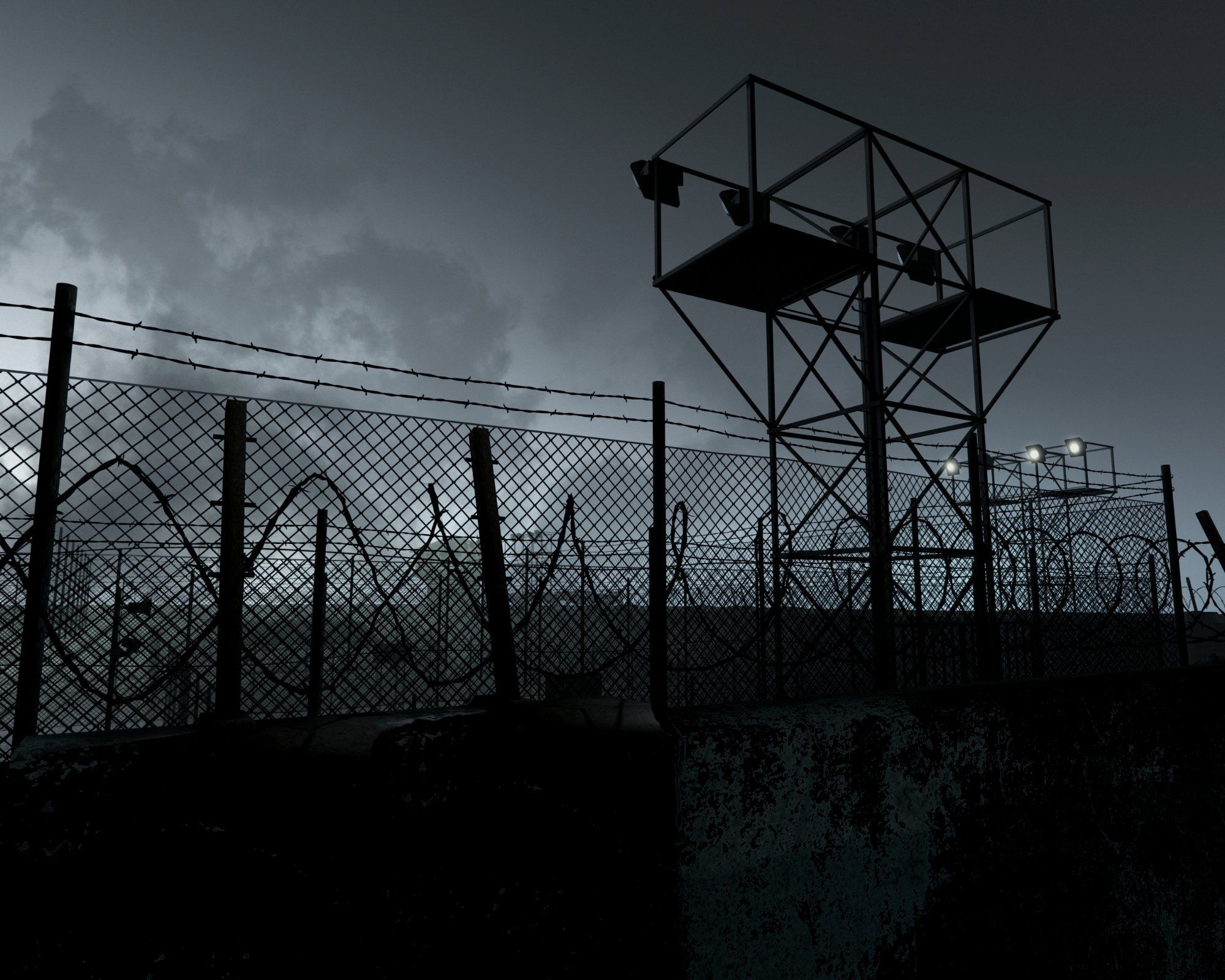
Barbed wire fence of a secured site at night

How Osavul helps

How Osavul helps counter physical threats

Civil unrest, terrorism and sabotage worry risk managers more than ever, says the Allianz Risk Barometer 2026. Most of it leaves a trail online first. That's where Osavul starts.

AI Intel Platform features

Physical threat intelligence capabilities

Sabotage, attacks on sites and infrastructure, surveillance and unrest near your locations and people.

Track threat actors, TTPs and weak signals behind hybrid attacks.

Hacktivist campaigns, APT activity, data leaks and attack chatter about your assets on open and dark web sources.

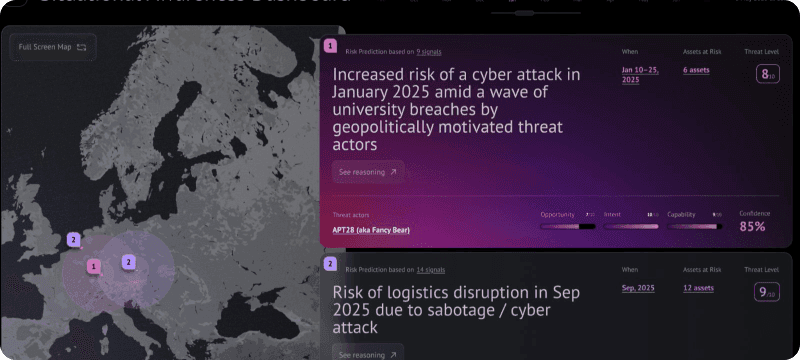
Forecast who may attack, how, where and when, with the reasoning behind every result.

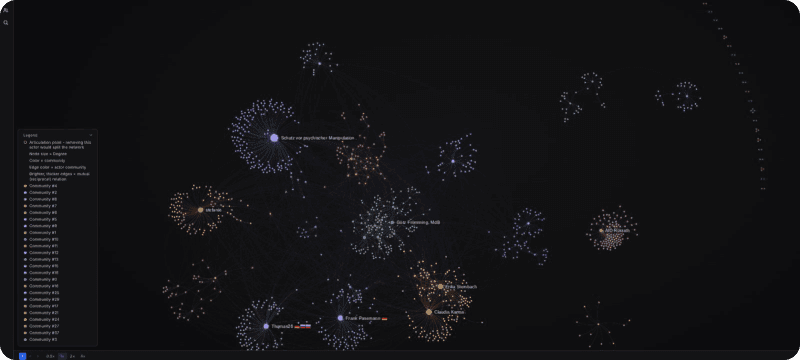
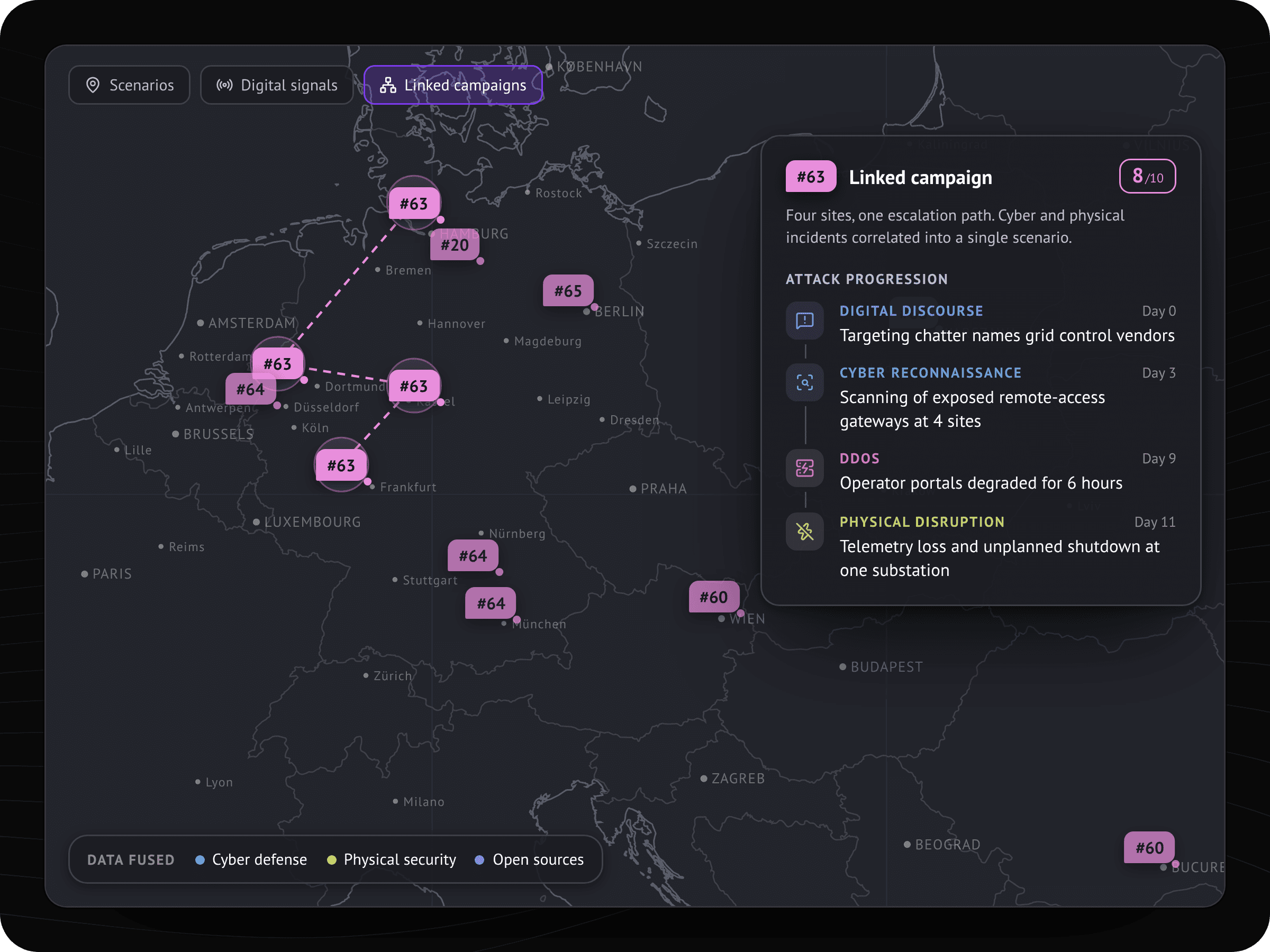
Osavul interface: Cross-domain cyber and physical disruption correlation

Hybrid threats span digital and physical environments, and our customers shouldn't have to defend against them in silos.

Co-Founder and Chief Business Development OfficerOsavul
Janus threat forecast for a Western European national rail operator

Case study · Sabotage · Critical infrastructure

How a Western European national rail operator anticipates sabotage threats to its network

Janus risk modeling across sabotage, espionage and influence signals targeting rail assets, stations and staff.

Read the case study
FAQ

Frequently asked questions

Short answers for security, facilities and travel teams.

Talk to a threat analyst

Physical threat intelligence is the collection and analysis of signals that point to harm against an organization's sites, staff or executives: protests, threats, surveillance, sabotage and violence. Most of it starts online. Reading those signals early gives security teams time to change a route, add guards or warn local police.

Almost all of them now. Protests and blockades are organized in group chats, executives are threatened in comment threads, and saboteurs are hired on Telegram. Europol's TE-SAT 2026 says the online world speeds up radicalization and makes it easier for attackers to coordinate. Osavul's 2026 study with Edelman found physical-world risk signals in 56% of hostile narratives about global brands.

Each message gets AI enrichment, including the location it mentions or comes from. Osavul matches that against the sites, routes and events you register, whether it's one plant or a whole region. If a threat, a protest call or a drone sighting falls inside a perimeter, it's tied to that asset and lands in the right team's queue.

In near real time. Once a signal matches your sites, people or keywords, an alert goes out with the source, location and a short assessment. You choose the channel: the platform, email, or your SIEM via API. For physical security risks that build slowly, such as a protest planned for next week, Janus adds a forecast of likelihood and timing.

Yes. You can run Osavul on-premise or in a sovereign cloud and connect it to your SIEM or other tools by API, which keeps your data under your control. Setup, integrations and onboarding are done together with Osavul analysts, solution architects and engineers.

See the threats around your sites

Get a demo built around your sites, people and travel.

Book a demo
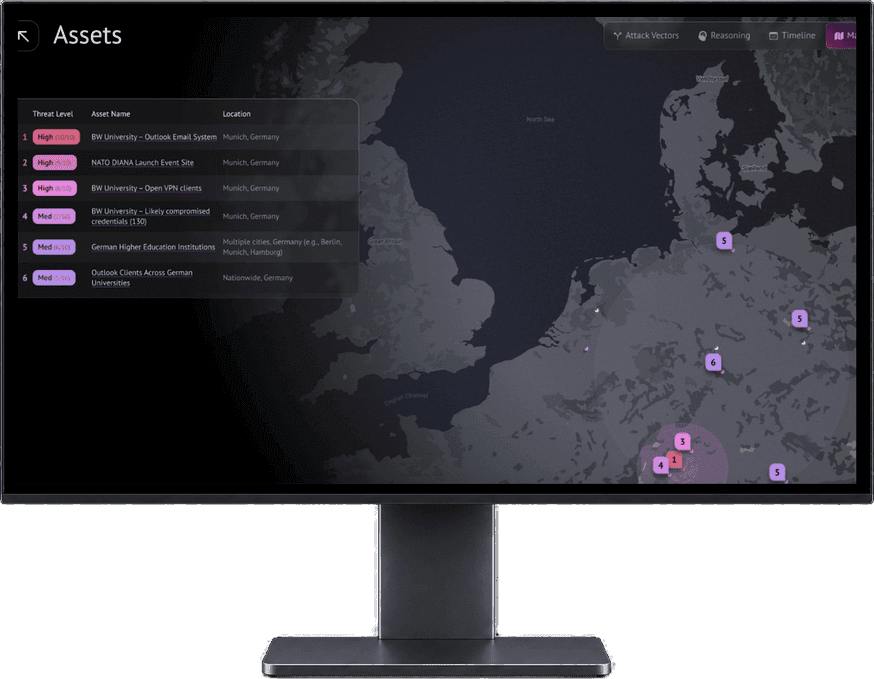
Janus risk intelligence platform on a monitor