
Case study · FIMI
From Russia with Automation: how RT content gets around EU sanctions
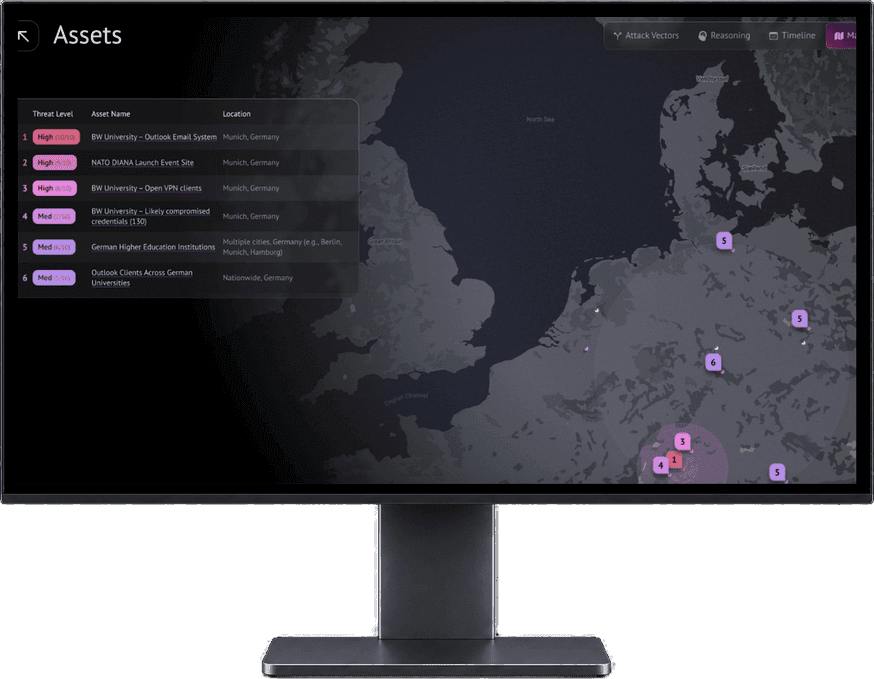
Osavul traced 33 German-language domains that keep spreading RT content in the EU despite sanctions, and the accounts amplifying it.
Read the case studyAI Intel Platform
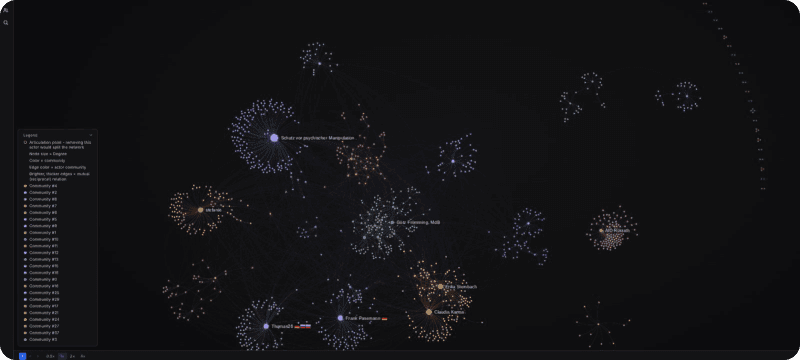 Data intelligence platformNebulaAccess and enrich data from 10+ data types, including messaging apps and underground communities, and get it in the form your analysts need.Explore Nebula
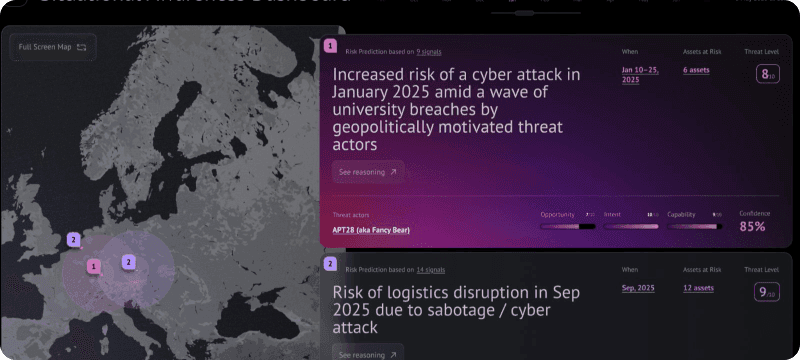 Risk intelligence platformJanusTrack physical, cyber, cognitive and hybrid threats, get early warning and model who may attack, how, where and when.Explore Janus
Products
 Osavul for Corporate SecurityDetect sabotage, espionage, and influence operations targeting your people, sites, and operations, with real-time alerts and AI risk modeling.
 Osavul for National DefenseHybrid threat intelligence and information environment assessment for defense and security institutions, from early warning to response.
 Osavul for Strategic CommunicationsDetect, analyze, and counter FIMI campaigns with narrative intelligence across social media, Telegram, and the open web in 100+ countries.
 Osavul for Brand ProtectionIdentify narrative attacks, coordinated inauthentic behavior, and reputational risks targeting your brand before they escalate.
Solutions
Find the right setup by use case, industry, or team.
By use case

By team · Communications & Public Affairs
Public affairs monitoring that tells you which stories are forming about your organization, who started them and whether the outrage is real. Hear it before the press office phone rings.

Why it matters
Adversaries need only seconds to generate a convincing fake quote from your CEO. Foreign influence groups exploit these fabrications to sway policy debates across European capitals.
65%
Of people worry that foreign actors plant falsehoods in national media to deepen divisions.
540
FIMI incidents the EEAS documented in 2025, aimed at over 100 countries and about 200 organizations.
27%
Of those incidents used AI-enabled tactics: 147 cases, against 41 in 2024.
62%
Of people worry about what's real and what's fake online, 4 points more than a year ago.
How Osavul helps
Never walk into a crisis meeting unprepared. While adversaries coordinate across channels in Polish, French, or Greek, your team receives structured, translated intelligence from Osavul hours before the meeting starts.
Monday, one Telegram channel. Thursday, TikTok. Osavul's strategic communications intelligence follows a rumor like that across 100+ countries.
Sometimes the loudest voices in a debate are the same few people under ten names. Osavul maps who's who and calls out coordinated influence operations.
A hostile claim starts to climb at 11 p.m. By morning you have the accounts behind it and a few hours for issues management. More on narrative attacks.
40,000 signatures on a petition looks serious. Then you check who signed. Osavul tells honest criticism apart from a campaign someone paid for.
Use cases
The use cases communications and public affairs teams rely on most.

The story an editor hasn't noticed yet, but will by Friday. Explore narrative intelligence →
Who's pushing the story about your company, and whether they're real. Explore reputation risk →
A fake video of your CEO, flagged before it goes viral. Explore deepfake detection →
Interference around a vote, tracked while there's time to respond. Explore election security →
Cooperation with NATO and the Brandwatch–Blackbird consortium represents a significant milestone for Osavul. This cooperation allows Osavul to directly support NATO’s need for timely and comprehensive situational awareness.
Case study · FIMI
Osavul traced 33 German-language domains that keep spreading RT content in the EU despite sanctions, and the accounts amplifying it.
Read the case studyFAQ
Answers for communications and public affairs leaders.
Talk to a threat analystPublic affairs monitoring is keeping track of the bills, regulators, reporters and public mood that decide whether you keep your license to operate. Any tool can count mentions. Osavul looks at who is driving a story, whether foreign or fake accounts are involved, and how quickly it's moving from one platform to the next.
Watch where stories are born. That's rarely the front page and often a Telegram channel, a niche forum or a cluster of accounts that all appeared last month. Osavul monitors those corners and tells you when a claim starts moving faster than ordinary gossip would.
Share the bills, topics and regulators that worry you. Osavul follows them through news sites, social feeds, messaging apps and blogs in 100+ countries. Policy monitoring then shows which side is gaining, and if fake or foreign accounts are giving it a push.
Yes. Most comms leaders use Osavul for exactly that. Before a board meeting they print a two-page summary: what's being said, who started it, how far it got and whether real people are behind it. When a director asks where this came from, the original post is right there.
Government communications and strategic communications teams use Osavul to spot FIMI campaigns early and to check which hostile narratives actually land with their audiences. The NATO Virtual Manipulation Brief, which Osavul writes with NATO StratCom COE, is the public side of that work. Have a look before you book a call.
Book a demo to walk through your issues, not a generic example.
Book a demo