




By team · Corporate Security

Intelligence for corporate security management

Corporate security management for hybrid threats starts online. See sabotage jobs, fake recruiters and threats to executives while they're being planned. Then walk into the CSO's office with evidence, not rumors.

  • Front-Runner, Gartner Disinformation Security report
  • Deployed for NATO
Security officer monitoring surveillance screens in a security operations center

Why it matters

What a corporate security team faces in 2026

Modern physical sabotage rarely involves trained operatives. Adversaries recruit low-level actors on hard-to-reach channels, paying in cryptocurrency to conduct site reconnaissance before escalation.

How Osavul helps

How Osavul helps corporate security management

Your GSOC sees incidents when they happen. Osavul uncovers adversary planning early. That gives your team time to act.

Hybrid attacks are no longer a government problem alone. The companies running energy, airports, ports, transport and finance now face the same adversaries, usually without the means to see them coming.

Co-Founder and CEOOsavul
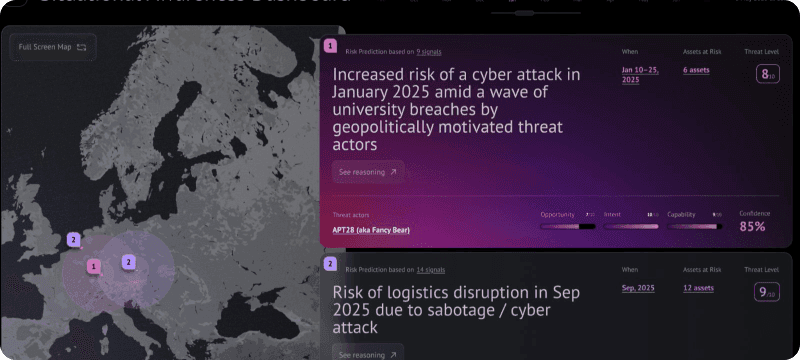
Janus threat forecast for a Western European national rail operator

Case study · Critical infrastructure

How a Western European national rail operator anticipates hybrid threats to its network

Janus risk modeling across sabotage, espionage and influence signals targeting rail assets, stations and staff.

Read the case study
FAQ

Frequently asked questions

Answers for corporate security leaders.

Talk to a threat analyst

Corporate security management is the work of keeping a company's people, sites and secrets in one piece. Ask a CSO and you'll hear about risk assessments, close protection, investigations and duty of care. Ask one in Europe since 2022 and they'll add hybrid threats: attacks planned online and done by someone hired for a single job.

They keep a company's people, sites and operations safe, and they're the ones who get the call at 3 a.m. when a warehouse floods or a manager is threatened. Day to day that's GSOC shifts, travel and event planning and the odd investigation. They also tell the chief security officer and the board which threats deserve money.

Show what it changed. Count the threats you caught before they hit and how much earlier the GSOC knew. Note the trip that was rerouted and the event that got extra guards. Then put a price on what didn't happen. Osavul keeps the alert history and sources, so the CSO walks into the board meeting with numbers.

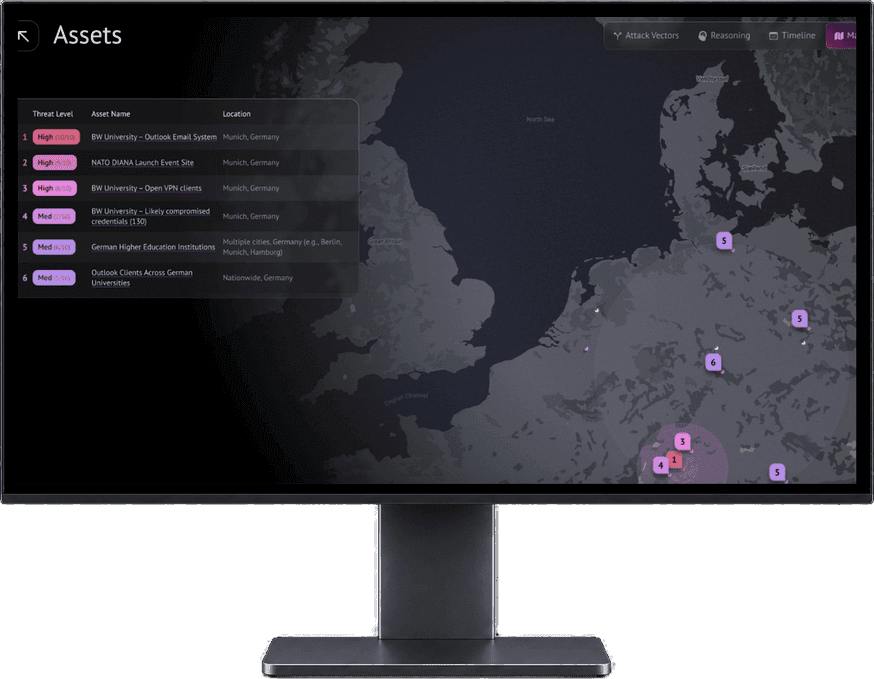
Alerts land in the Osavul dashboard or go into your GSOC tools through the API. Each one tells you where it is, who's probably behind it, how bad it looks and where it was found. Your analyst checks the evidence and makes the call. You keep the tools you already have, and nobody retrains.

Anything that can hurt people or stop operations. Threats against executives, a protest at the gate, someone filming your warehouse, a recruiter courting your staff. Then add rumors, because a rumor is often what starts the rest. Most hybrid campaigns use a few of these at once, which is why Osavul watches them together.

Hear about the threat before it reaches your gate

Book a demo built around your sites, people and sector.

Book a demo
Janus risk intelligence platform on a monitor