

Research with NATO StratCom COE
NATO Virtual Manipulation Brief: how generative AI amplifies propaganda against the Alliance
Narratives used against NATO, cross-language tracking and detection of the bot networks that spread them.
Read the briefAI Intel Platform
 Data intelligence platformNebulaAccess and enrich data from 10+ data types, including messaging apps and underground communities, and get it in the form your analysts need.Explore Nebula
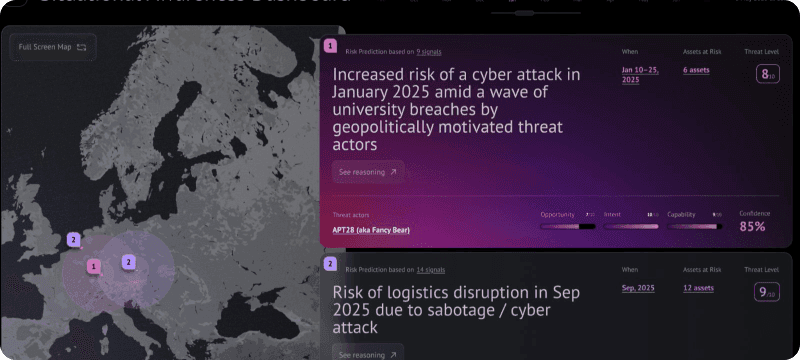 Risk intelligence platformJanusTrack physical, cyber, cognitive and hybrid threats, get early warning and model who may attack, how, where and when.Explore Janus
Products
 Osavul for Corporate SecurityDetect sabotage, espionage, and influence operations targeting your people, sites, and operations, with real-time alerts and AI risk modeling.
 Osavul for National DefenseHybrid threat intelligence and information environment assessment for defense and security institutions, from early warning to response.
 Osavul for Strategic CommunicationsDetect, analyze, and counter FIMI campaigns with narrative intelligence across social media, Telegram, and the open web in 100+ countries.
 Osavul for Brand ProtectionIdentify narrative attacks, coordinated inauthentic behavior, and reputational risks targeting your brand before they escalate.
Solutions
Find the right setup by use case, industry, or team.
By use case

Threats we cover · Influence operations
Cognitive warfare goes after how people think and decide. Osavul exposes the campaigns behind it, including bot networks and AI-made personas, so strategic communications and security teams can respond early.

How Osavul helps
These days a single operator can run hundreds of AI personas. So Osavul looks at how accounts behave, and only then at what they say.
Accounts posting within seconds of each other, sockpuppets, hashtags taken over by a network. Some personas are fully AI-made now. Osavul finds them on any platform.
Use narrative intelligence and graph analysis to connect the accounts, outlets and proxies behind a story, and to see which language or platform it moves to.
Who is the campaign aimed at? How far has it traveled? Is opinion moving at all? Sentiment and audience analysis answer that.
Early alerts and strategic communications intelligence buy teams time to pre-bunk, counter media manipulation and brief leaders.
AI Intel Platform features
Detect inauthentic accounts, sockpuppets and coordinated inauthentic behavior (CIB) behind a campaign.
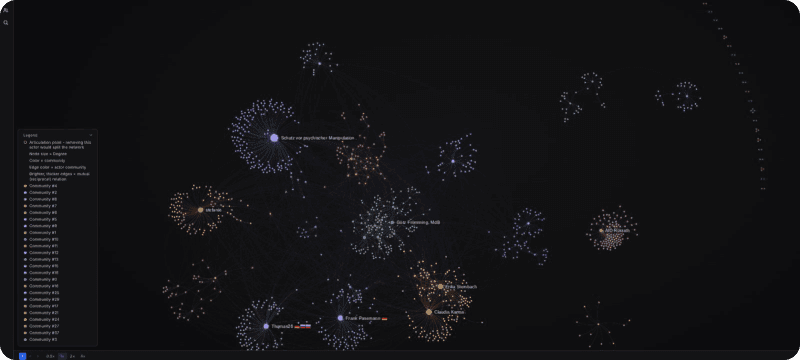
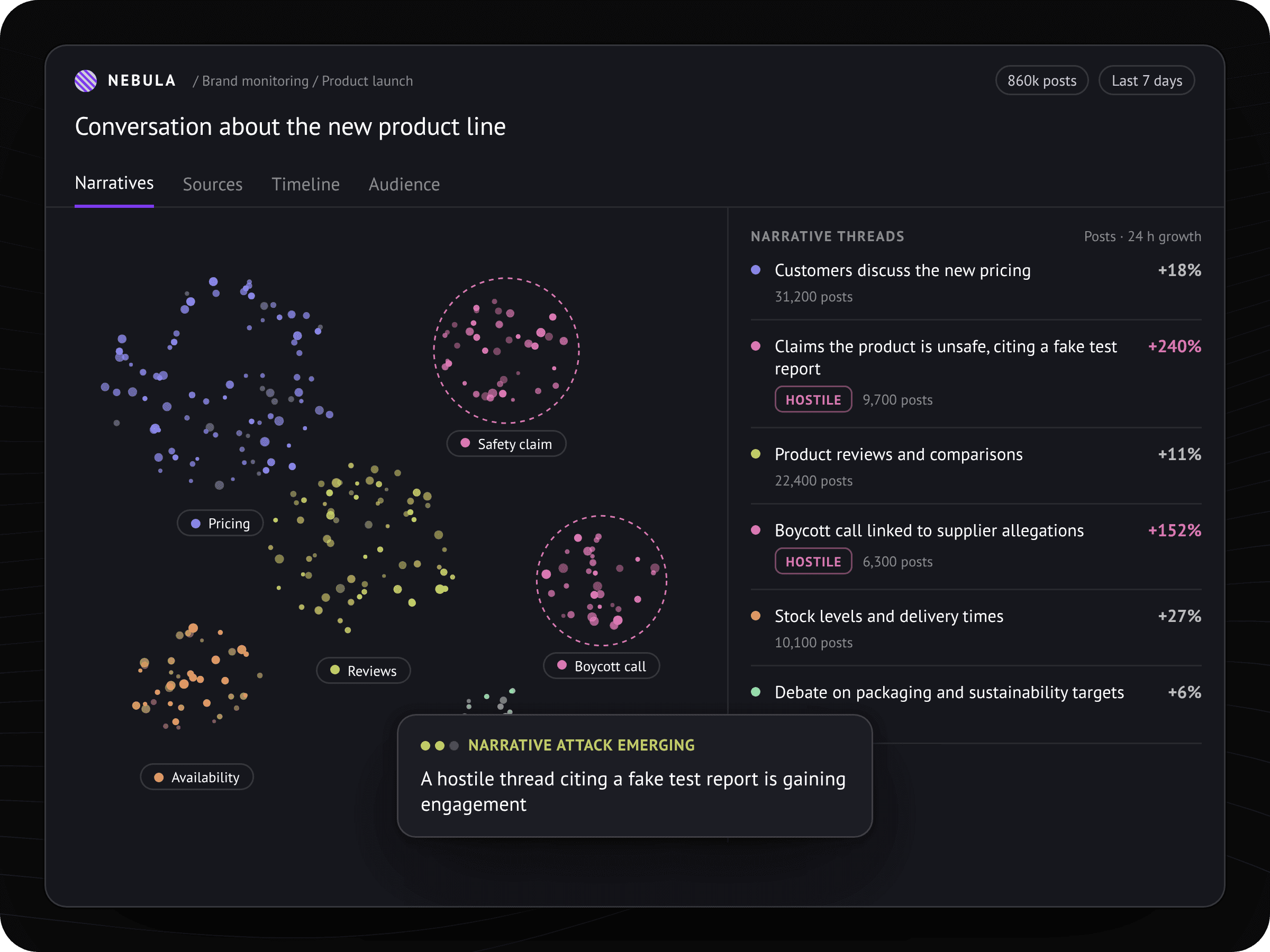
AI topic modeling and graph analysis show which narratives spread, who drives them and how communities connect.
Aspect-based sentiment on events, assets and topics across 100+ countries, over time.
Query in your language, retrieve content in every supported language and translate it in place.
Use cases
Use cases strategic communications, defense and policy teams pick to protect their audiences.

See hostile narratives form before they reach the mainstream.

Live picture of incidents and threats around your sites.
Protect elections from interference and synthetic content.
Trace actors, proxies and networks behind hostile activity.
We built Osavul under live operational conditions, and that experience travels. From Luxembourg we now serve customers worldwide, increasingly in regions facing conflict and instability, where the need for sovereign, multi-language intelligence is most acute.
Research with NATO StratCom COE
Narratives used against NATO, cross-language tracking and detection of the bot networks that spread them.
Read the briefFAQ
Short answers for strategic communications, defense and policy teams.
Talk to a threat analystCognitive warfare is the contest over how people perceive, think and decide, fought with synchronized military and non-military means. NATO's Cognitive Warfare Concept calls it the fight for cognitive superiority. Adversaries mix information manipulation, cyber activity and pressure on public trust, aiming to wear down a society's will and its ability to decide.
Information operations is a military term: actions against an adversary's information and decision-making, cyber and electronic means included. Influence campaigns are wider and often civilian. Covert or overt, they try to change what a target audience thinks or does, usually through fake personas, proxies and paid amplification.
CIB is a network of accounts that work together while hiding who runs them, in order to mislead people. Meta and other platforms judge it by deceptive behavior, not by content. In its August 2026 report, Meta said that every network it took down had used generative AI. Some ran fully synthetic personas.
Osavul pulls posts from social media, Telegram, TikTok, news and emerging platforms. AI groups them into narratives, and graph analysis finds accounts acting in sync. In an OSINT investigation workspace your analysts then see who runs the campaign, whom it targets and how it spreads, with evidence to share with partners.
Operators flood the web with content so AI models soak it up and repeat it, which researchers call LLM grooming. Carnegie's October 2026 analysis cites tests where chatbots repeated Russian false claims in roughly a third of answers. OpenAI also reported a Russia-origin operation that got its content into mainstream media.
Get a demo built around your country, mission and audiences.
Book a demo