
Case study · Energy
The Nuclear Push: how Russia uses FIMI to support Rosatom abroad
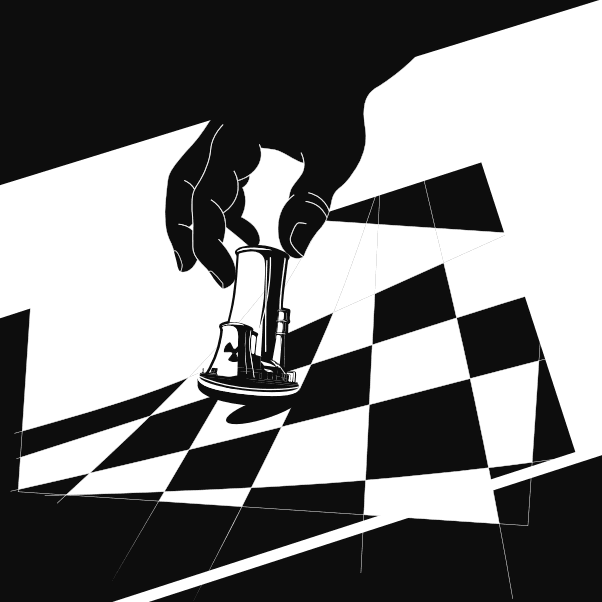
Osavul traced coordinated campaigns against Rosatom’s rivals in Kazakhstan, France, Ghana, Argentina and the Czech Republic.
Read the case studyAI Intel Platform
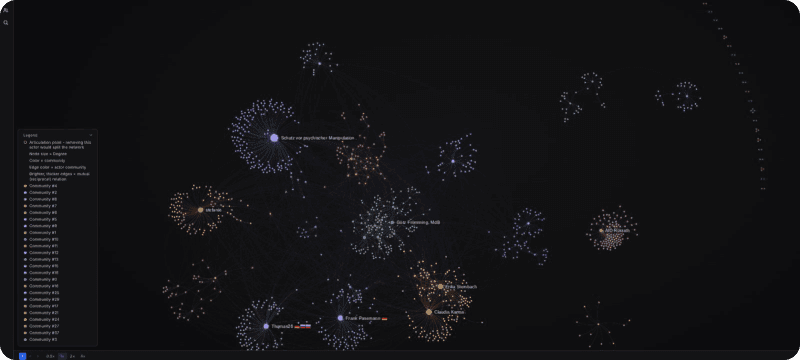 Data intelligence platformNebulaAccess and enrich data from 10+ data types, including messaging apps and underground communities, and get it in the form your analysts need.Explore Nebula
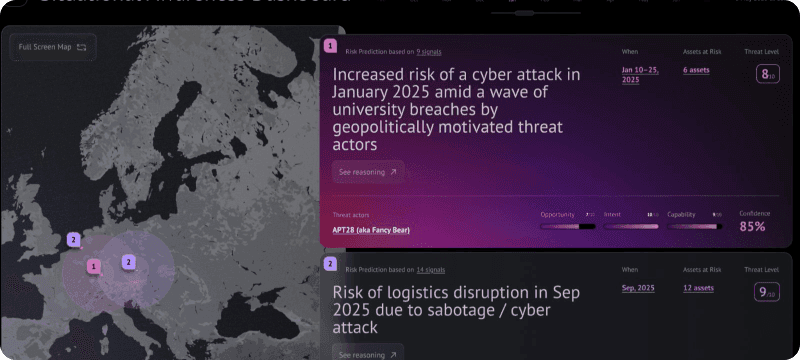 Risk intelligence platformJanusTrack physical, cyber, cognitive and hybrid threats, get early warning and model who may attack, how, where and when.Explore Janus
Products
 Osavul for Corporate SecurityDetect sabotage, espionage, and influence operations targeting your people, sites, and operations, with real-time alerts and AI risk modeling.
 Osavul for National DefenseHybrid threat intelligence and information environment assessment for defense and security institutions, from early warning to response.
 Osavul for Strategic CommunicationsDetect, analyze, and counter FIMI campaigns with narrative intelligence across social media, Telegram, and the open web in 100+ countries.
 Osavul for Brand ProtectionIdentify narrative attacks, coordinated inauthentic behavior, and reputational risks targeting your brand before they escalate.
Solutions
Find the right setup by use case, industry, or team.
By use case

Industries · Energy & Critical Infrastructure
Critical infrastructure protection for energy and utility operators. Know who is planning sabotage, espionage or an influence campaign against your sites.
Industry stats
Since 2022, the same European operators have dealt with arson, network intrusions and drones over their sites, sometimes in the same month. EU law now expects them to plan for this before it happens, not after.
151
Known Russia-linked sabotage and crime-terror plots in Europe between February 2022 and February 2026
Source: GLOBSEC & ICCT, “Update of Russia’s Crime-Terror Nexus”, February 2026
246%
More confirmed Russian sabotage against European critical infrastructure in 2024 than in 2023
73%
Of the cyber incidents ENISA recorded in the EU in 2025 hit organizations covered by NIS2
11
Sectors where critical entities now have to assess physical, hybrid and cyber risks under the CER Directive
Source: Directive (EU) 2022/2557, the Critical Entities Resilience Directive
How Osavul helps
Start with the platform, or go straight to the use case your team needs to solve.
Product · Janus
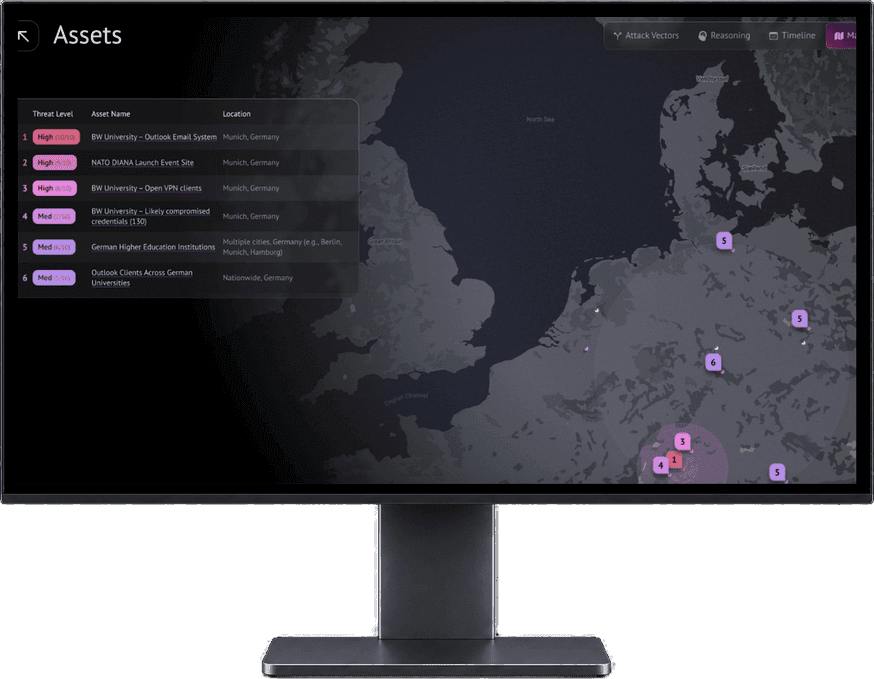
Built for the people who guard plants, substations, pipelines and staff. You get alerts as things happen, profiles of the actors involved and a forecast of what they’re likely to do next.
Use case
Sabotage, espionage, cyber and influence signals about your sites and suppliers, in one place instead of five.
Explore Hybrid Threat IntelligenceUse case
Which actor might hit which asset, how, where and when. Weeks of warning beat minutes.
Explore Risk Modeling & Early WarningUse case
If there’s a protest at the gate or a drone over the yard, it shows up on the map your team already has open.
Explore Situational AwarenessUse case
Doxxing, impersonation and threats against your leadership and site managers, caught early.
Explore Executive ProtectionHybrid risks
A saboteur scouting your site on Telegram doesn’t care which department owns the problem. Janus pulls the physical, cyber and online clues together, and your security team gets the warning while it still matters.
Someone sets fire to a substation, leaves explosives by a pipeline or drags an anchor over a cable. It’s usually planned online first, which is where Osavul spots the recruiters, the photos and the target lists.
Learn about sabotageFirst they photograph the facility. Then a “recruiter” writes to one of your engineers on LinkedIn. Osavul flags both, and the link between them.
Learn about espionageA drone over the site on Monday, a DDoS on Wednesday, jammed GPS on Friday. Treat it as one campaign, because it usually is.
Learn about hybrid threatsStories about prices, blackouts or a new nuclear plant can be pushed by coordinated accounts until people turn up to protest at your gate.
Learn about influence operationsHybrid attacks are no longer a government problem alone. The companies running energy, airports, ports, transport and finance now face the same adversaries, usually without the means to see them coming.
Case study · Energy
Osavul traced coordinated campaigns against Rosatom’s rivals in Kazakhstan, France, Ghana, Argentina and the Czech Republic.
Read the case studyFAQ
Hybrid risk intelligence for energy and critical infrastructure operators.
Talk to a threat analystCritical infrastructure protection is how operators keep power, gas, water and transport running when someone is trying to break them. In the UK you’ll hear it called protecting critical national infrastructure. In Europe it’s no longer only a cyber job: sabotage and influence operations are now part of the same picture.
Designated operators have to look at their risks, take steps to keep running and tell the authorities when something serious goes wrong. EU countries had until July 2026 to name who is designated. That’s where Osavul helps: its AI threat intelligence gives each assessment evidence on the hybrid risks to specific sites.
Mostly fire and sabotage, at substations, along pipelines and on undersea cables. After that come drones over sites, GPS jamming and approaches to engineers or contractors. Plenty of incidents arrive with a DDoS attack or a story about energy prices attached, and that’s the reason Osavul watches all three layers at once.
Osavul looks for the preparation. Janus reads Telegram recruitment posts, underground forums, reconnaissance reports and attacks on peer operators, then uses predictive threat intelligence to model who may strike, how, where and when. In one documented case it named the target and the method of a rail sabotage campaign months before it started.
Yes. Some Osavul clients keep everything on their own servers, others use a sovereign cloud. Either way, data about your sites, people and incidents doesn’t leave your jurisdiction. Before anything is collected, Osavul solution architects sit down with your security and IT people to agree the setup, the integrations and who gets access.
Book a demo built around your sites, assets and sector.
Book a demo