The digital front line isn't just a metaphor anymore; it's a high-speed data stream. While traditional kinetic energy still dictates the physical map, the psychological and strategic maps of modern conflict are being redrawn in real-time on encrypted messaging apps. At Osavul, our professional security audits have revealed a stark reality: what was once a simple chat tool has evolved into a sophisticated instrument of information warfare.
For state security agencies and corporate entities, understanding the warfare culture and environment of these platforms is no longer optional. It is a fundamental requirement for maintaining cognitive security. This article explores why Telegram as a weapon of war has become a primary concern for information integrity and how modern communication technology facilitates these shifts.
What is Information Warfare in the Age of Messaging?
To understand the current landscape, we must first define the terms of engagement. Information warfare is the strategic use of information to gain a competitive advantage over an opponent, often by manipulating the flow of data or the perception of reality. In a modern irregular warfare environment, this isn't just about hacking servers; it’s about hacking minds.
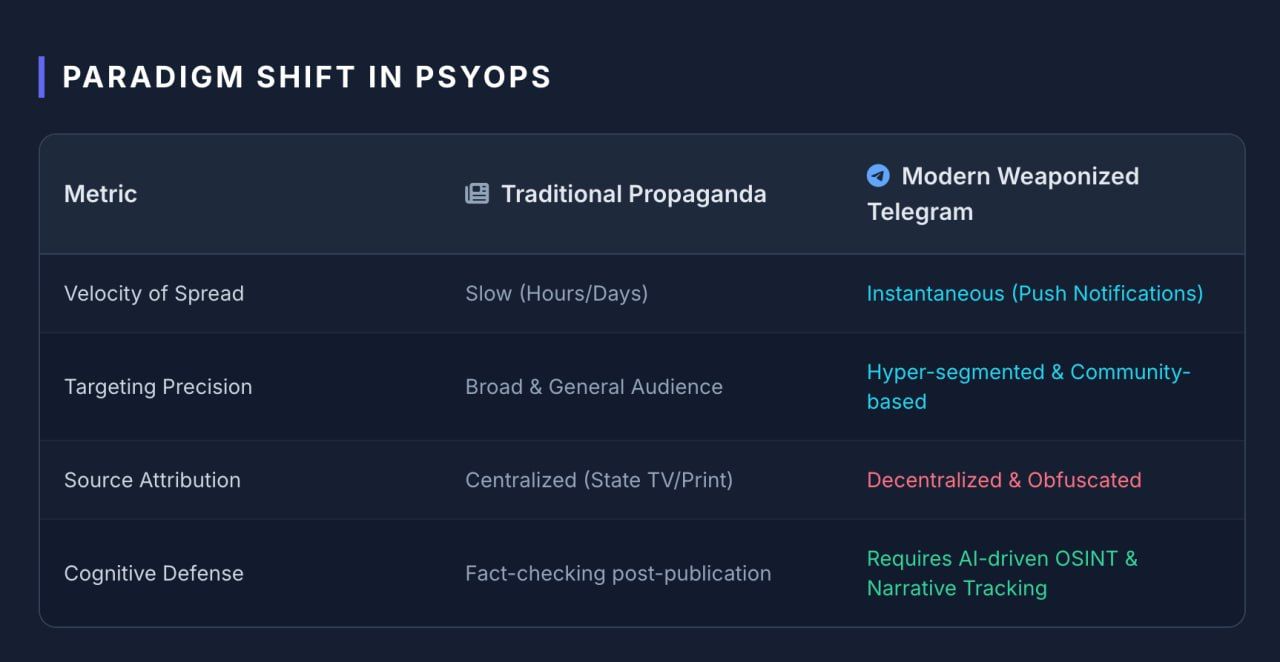
The purpose of information warfare is to influence the decision-making of targets, whether they are high-level government officials or the general public opinion. By seeding doubt, spreading panic, or reinforcing existing biases, actors can achieve strategic goals without firing a single shot. At Osavul, we've observed that the speed of social media allows for "narrative attacks" that move faster than traditional debunking methods can handle.
| Feature | Traditional Propaganda | Modern Information Warfare |
|---|---|---|
| Speed | Slow (Print/Radio) | Instantaneous (Push Notifications) |
| Targeting | Broad Audience | Micro-targeted via Algorithms |
| Control | Centralized (State TV) | Decentralized (Weapon Telegram) |
| Feedback | Minimal | Real-time Engagement & Data Mining |
Why Telegram is the New Frontier for Information Warfare
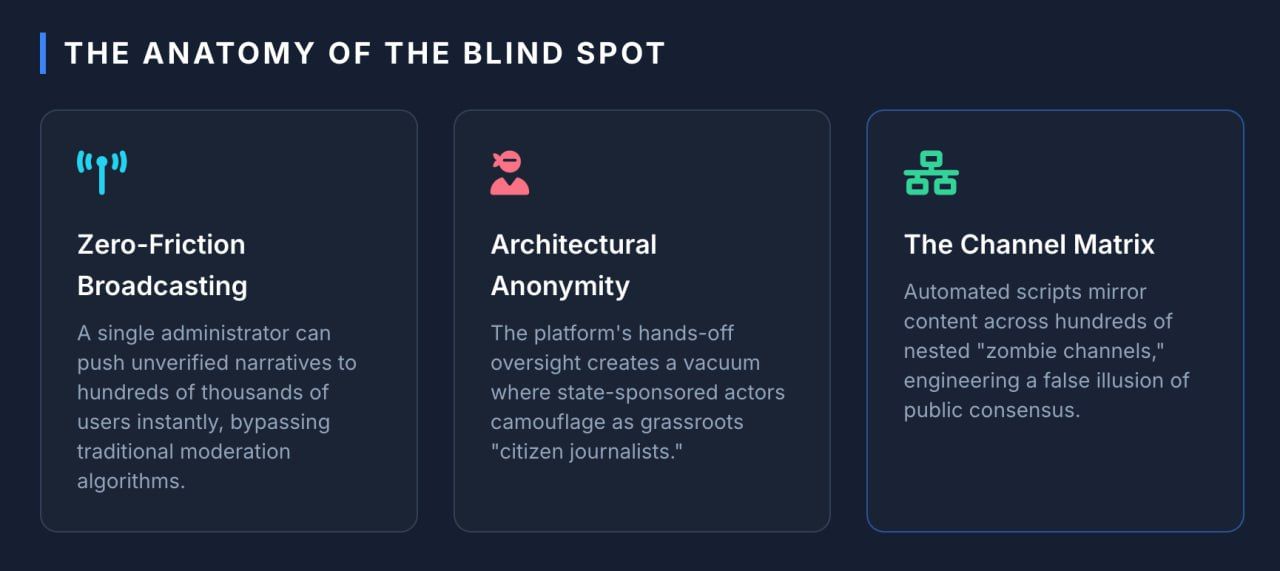
Telegram occupies a unique "grey zone" in the digital ecosystem. Unlike platforms moderated by Western tech giants, Telegram’s hands-off approach makes it an ideal Telegram weapon. It functions as a hybrid of a private messenger and a public broadcasting tool, creating a potent mix for psychological operations.
How is Telegram as a weapon of war actually wielded on the digital front line? In our security audits, we’ve seen it function as a high-speed hub for real-time tactical coordination, where a single push notification can shift a narrative in seconds. It’s a distribution point for leaked documents—though we’ve noticed a curious trend where genuine data is often laced with subtle forgeries to poison the well of public discourse.
Telegram has become the primary source of news
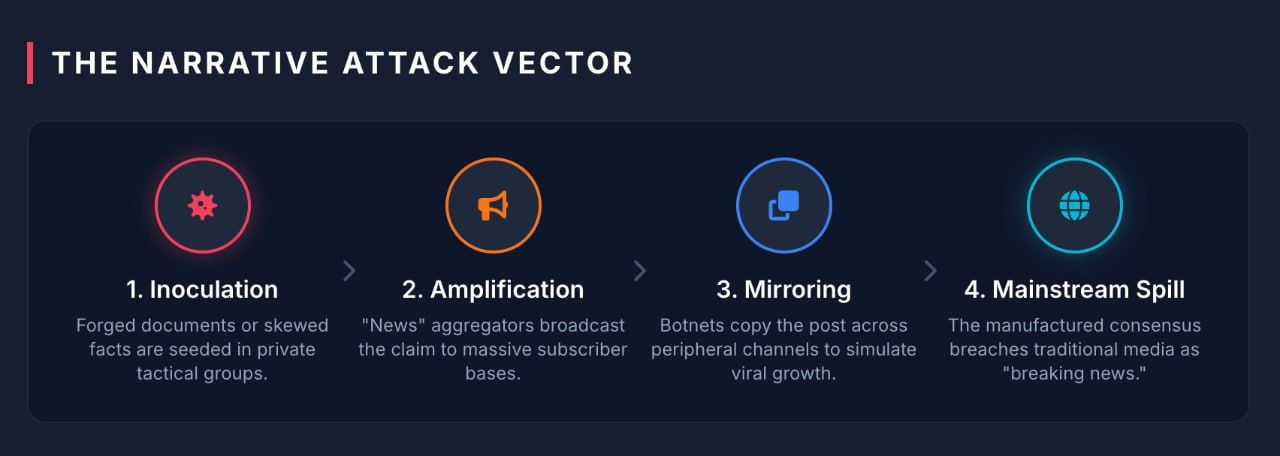
For millions, it has become the primary source of news, yet its lack of transparent oversight makes it a massive "blind spot" for traditional security frameworks. This vacuum allows electronic warfare and cyber warfare narratives to flourish unchecked, often reaching deep into the domestic conversation before analysts even flag the threat.
Analysts often overlook the specific vulnerability inherent in the platform’s very architecture. Unlike the friction-heavy moderation of other social media, Telegram’s channel structure allows a single administrator to broadcast to hundreds of thousands of followers instantly. It is the perfect petri dish for psychological warfare.
We’ve watched as the line between grassroots "citizen journalism" and professional, state-sponsored psychological operations becomes dangerously blurred, turning a simple messaging app into a decisive telegram weapon. To see how these tools are evolving, one only needs to look at how Telegram OSINT tools are being utilized for both investigation and exploitation.
The Osavul Perspective
The challenge for various state security agencies, companies, and businesses is the sheer volume of data. Tracking a narrative across thousands of nested channels is humanly impossible. This is where control systems powered by AI become essential.
In our experience, detecting a disinformation campaign in its infancy requires more than just keyword tracking. It requires understanding the "DNA" of the narrative. We’ve noticed a curious trend: many campaigns use automated scripts to mirror content across hundreds of "zombie" channels to create an illusion of consensus. By deploying solutions like Nebula, organizations can finally see through the noise.
Modern security isn't just about defending perimeters; it's about maintaining information integrity in a world where the weapon Telegram is accessible to anyone with a smartphone.
Frequently Asked Questions
What is information warfare?
It is the tactical and strategic use of information to gain a competitive edge over an adversary by influencing their perceptions and decision-making processes.
What is the purpose of information warfare?
The core objective is to degrade the opponent's ability to process information accurately, thereby forcing them into making decisions that favor the attacker's interests.
How can Telegram be used in warfare?
Telegram acts as a multi-tool for warfare, ranging from a logistical communication bridge to a powerful platform for spreading propaganda and conducting large-scale psychological operations.