How to Combat Misinformation in the Online Information Ecosystem
Information has always been valuable, but lately, it has become a weapon. For a long time, the security community focused strictly on the pipes - the networks, the servers, the encryption protocols. But today, the payload isn’t just malware designed to steal credit card numbers; it’s a narrative designed to steal reality.
We are living through a fundamental shift in how trust operates. With the explosion of generative AI and the industrialization of troll farms, the barrier to entry for creating convincing falsehoods has dropped to near zero. For security professionals, protecting the integrity of the message is now just as important as protecting the confidentiality of the data. Understanding how to combat misinformation isn't just a social challenge anymore; it’s a hard security requirement for nations, corporations, and individuals alike.
The Attack Vector - Hacking the Human OS
You can’t stop an attack if you don’t understand the exploit.
Think of a modern disinformation campaign less like a debate and more like a DDoS (Distributed Denial of Service) attack against your attention span. Attackers aren't just trying to slip a lie past your firewall; they are flooding the zone with so much noise, outrage, and half-truth that your processing capacity crashes.
Here is the reality that many overlook - the goal isn't necessarily to make you believe the lie. The goal is to make you doubt everything. They want to exhaust you until you give up on finding the truth altogether.
In cryptography, we talk about "trust assumptions" - the baseline things we accept as true to make a system work. In the information space, those assumptions are being weaponized. Our brains come with a zero-day vulnerability: we are hardwired to trust information that feels good or confirms what we already suspect. Malicious actors know this code better than we do. To fight misinformation effectively, we have to stop treating it like a content problem and start treating it like a breach of the "human operating system." We need patches - both technical and psychological - to close that security hole.
The Platform Layer - Algorithmic Defense
The front line of this conflict is obviously the platforms we use every day. When we look at how to combat misinformation on social media, we are looking at a problem of scale. No human moderation team can read billions of posts. This is where the integration of automated defense mechanisms becomes non-negotiable.
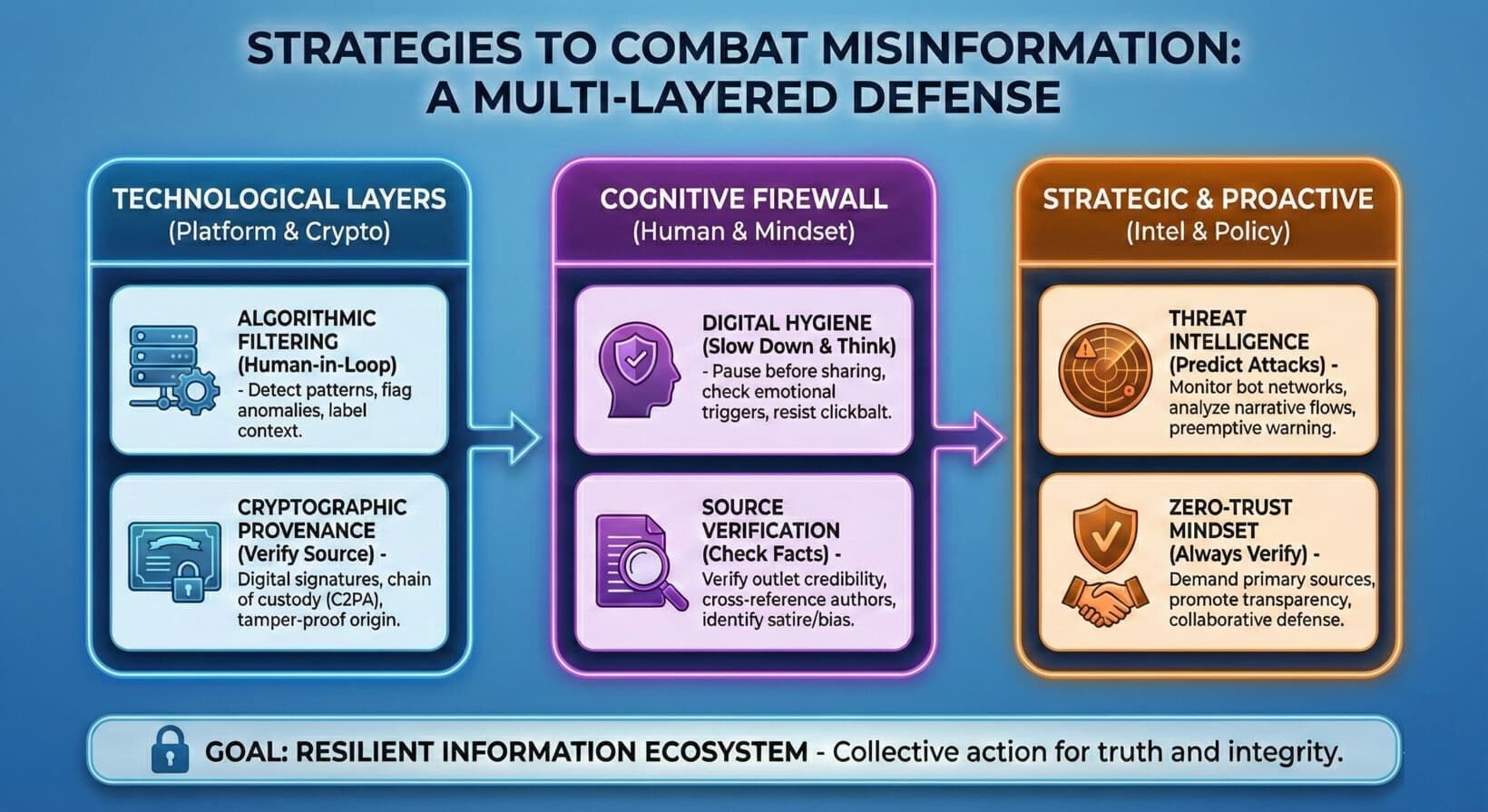
However, automation isn't a silver bullet. It requires a nuanced, hybrid approach. Tech giants are finally acknowledging that an algorithm optimized purely for engagement is a security risk. Google, for instance, has been refining its approach to this, moving beyond simple removal to more complex context-labelling. Their breakdown of these safety measures is worth a read for anyone interested in the mechanics of platform integrity. You can find their detailed methodologies here.
The industry consensus is shifting. It’s no longer enough to just reactively delete fake news. We have to design systems that are resilient to manipulation by default, much like we design secure networks.
Cryptography - The Return to Verification
If we can’t trust the content, we must verify the source. We need to move toward a model of "provenance."
In the physical world, we have supply chain security. We track a product from the factory to the shelf to ensure it hasn’t tampered with. We need the same for digital content. Emerging standards like the C2PA (Coalition for Content Provenance and Authenticity) allow publishers to cryptographically sign images and videos.
This doesn't stop someone from lying, but it does verify who is speaking. If a video claims to be from a reputable news agency but lacks the cryptographic signature of that agency, the browser should flag it as unverified. This technical layer is essential to combat misinformation. It removes the guessing game. You check the certificate. If the math works, the origin is authentic. If it doesn’t, you treat it as hostile.
Cognitive Security - The Human Firewall
We can build the strongest firewalls in the world, but if a user clicks a phishing link, the system is compromised. The same logic applies here. The ultimate endpoint is the human mind. To fight misinformation, we have to upgrade our own critical thinking filters.
This doesn't mean everyone needs a PhD in data science. It means practicing "digital hygiene." It’s about slowing down. The adrenaline hit of a shocking headline is the bait. The European Parliament recently released a very practical set of guidelines that serves as an excellent "user manual" for this. They break it down into actionable steps: checking the outlet, assessing the tone, and verifying the author. It’s a solid resource for building personal resilience, available here.
Education in this sector is effectively "patching" the user. If we can normalize the habit of verification - checking the source code of reality, so to speak - we significantly reduce the viral spread of falsehoods. This is how to fight misinformation online at the grassroots level: by making the audience harder to trick.
Threat Intelligence and Pre-bunking
For organizations, waiting for a lie to spread is a failed strategy. In network security, we hunt threats before they breach the perimeter. In information security, this is called "pre-bunking."

By analyzing narrative flows and monitoring bot networks, security analysts can predict which disinformation narratives are about to launch. If you know a bad actor is preparing a campaign claiming a specific data breach happened (when it didn’t), you release the facts first. You inoculate the audience.
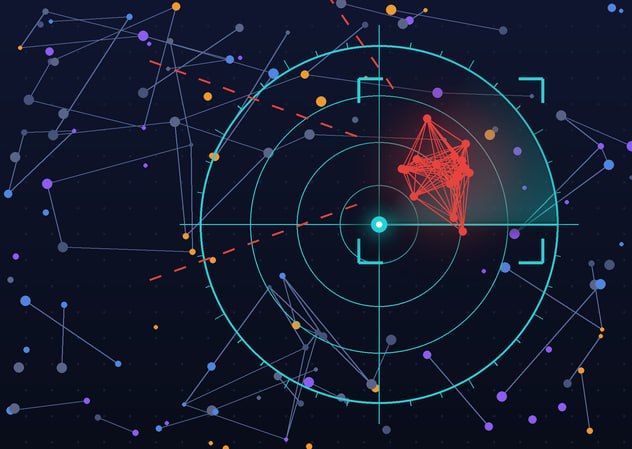
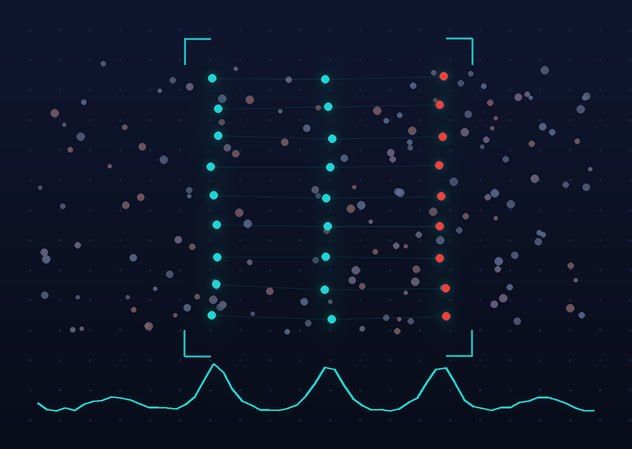
This requires advanced tools that can parse millions of data points to spot coordinated inauthentic behavior. It’s a game of pattern recognition. Authentic viral content looks different from manufactured viral content. One grows like a plant; the other hits like a coordinated airstrike. Identifying these patterns allows us to fight misinformation proactively, neutralizing the narrative before it achieves dominance.
The Zero-Trust Society
We are moving toward a "Zero-Trust" information environment. In security architecture, Zero Trust means "never trust, always verify." This sounds cynical, but it’s actually protective.
It means we don’t blindly accept a screenshot of a tweet; we look for the live link. We don’t accept a video at face value; we look for the provenance data. We don’t accept a sensational claim; we demand the primary source.
To fight misinformation is not to engage in censorship. It is to demand accuracy. It is a collaborative effort requiring tech companies to secure the infrastructure, governments to mandate transparency in advertising, and citizens to refuse to be useful idiots for propaganda networks.
Expert Insights
Can’t we just build an AI to delete all the lies automatically?
AI is a pattern matcher, not a philosopher. It understands probability, not "truth." While machine learning is great at spotting bot farms or flagging manipulated images, it fails miserably with nuance. It can't tell the difference between a lie and a joke (satire), or a lie and a quote about a lie. If we hand over the keys of reality to an algorithm, we end up with two disasters: censorship of legitimate debate (false positives) or sophisticated propaganda slipping right through. The best security architecture here is "human-in-the-loop" - let the AI filter the noise, but keep a human pilot to land the plane.
Is there actually a difference between misinformation and disinformation?
Think of misinformation like a bug in the code. It’s a mistake. Your aunt sharing a wrong date for a protest isn't trying to hurt anyone; she just didn't verify. Disinformation is malware. It is engineered. It is a lie constructed with a specific payload - to deceive, to destabilize, or to sell a narrative. Then you have malinformation, which is like a doxxing attack. The info might be true (like leaked private emails), but it’s deployed specifically to destroy a reputation. You can’t fight a mistake the same way you fight a weapon; that’s why the distinction is critical.
How can I spot a fake news site in under 30 seconds?
Do a "digital gut check." First, look at the URL. Is it bbc.com or bbc-news-live.net? Typosquatting is a classic trick. Second, check the "About" page. If there are no physical addresses, no editor names, or the team photos look like generic stock models (or AI-generated faces with weird eyes), close the tab. Finally, check your own pulse. Disinformation is designed to bypass your logic and hit your emotions. If a headline makes you instantly furious or terrified, that’s a red flag. That emotional spike is a feature, not a bug - it’s designed to make you click "share" before you think. If you feel triggered, pause. You’re likely being played.
Conclusion
Let’s be honest: this security arms race has no finish line. As soon as we patch one vulnerability, the adversary finds another exploit. That is the nature of the job.
We know that synthetic media and deepfakes will become nearly indistinguishable from reality. We know bot networks will mimic human behavior with frightening accuracy. But that doesn't mean we surrender the space.
We aren't defenseless. By stacking our defenses - cryptographic proof, active threat hunting, and a hardened, skeptical mindset - we can hold the line. The industry already understands how to combat misinformation; we have the playbook. The challenge now isn't discovery, it's execution. We need to fight misinformation exactly the way we fight ransomware or state-sponsored hacking: systematically, relentlessly, and without blinking.